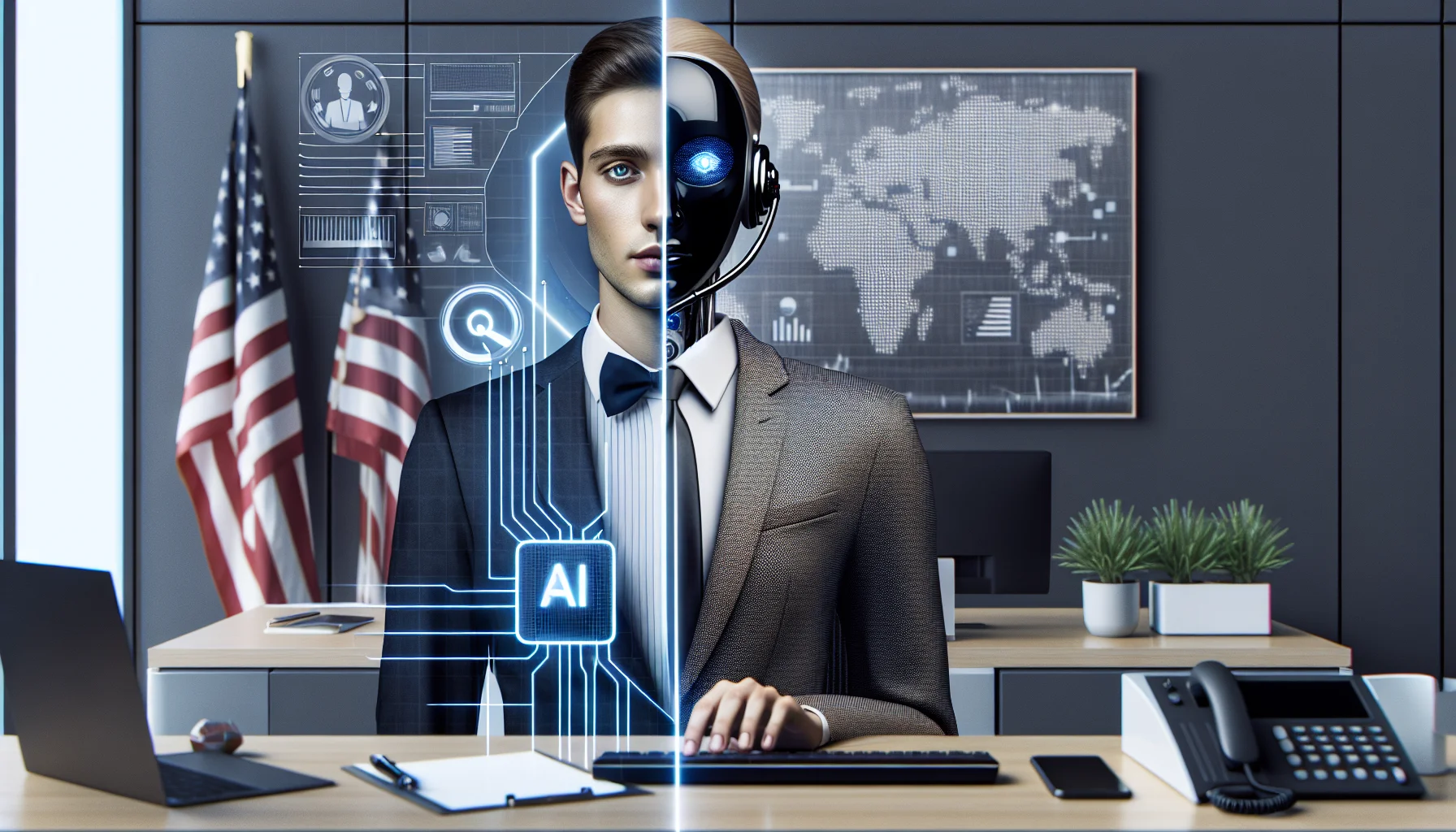
AI Receptionist vs Human Receptionist in the United States: Which Is Better for Your Business?
Businesses across the United States are rethinking how they handle customer calls. With rising labor costs and increasing demand for fast response times, many companies are comparing traditional receptionists with AI-powered solutions.
So which option is better — a human receptionist or an AI receptionist?
In this article, we break down the key differences and help you decide which solution fits your business.
What Is a Human Receptionist?
A human receptionist is a staff member responsible for answering calls, managing appointments, and interacting directly with customers.
Typical responsibilities
- Answer incoming calls
- Schedule appointments
- Transfer calls to team members
- Handle customer inquiries
While human receptionists provide a personal touch, they are limited by working hours, availability, and cost.
What Is an AI Receptionist?
An AI receptionist is an automated voice assistant that answers calls, interacts with customers, and performs tasks in real time without human involvement.
Key capabilities
- Answer calls instantly 24/7
- Handle multiple calls at the same time
- Book appointments automatically
- Qualify leads and collect information
- Transfer calls when needed
AI receptionists are designed to scale and operate continuously, making them ideal for modern businesses. See our full overview of AI receptionist services in the United States.
Cost Comparison: AI vs Human Receptionist
One of the biggest factors for US businesses is cost.
| Factor | Human Receptionist | AI Receptionist |
|---|---|---|
| Monthly cost | High, including salary and taxes | Low, usually subscription-based |
| Availability | Limited hours | 24/7 |
| Call capacity | One call at a time | Multiple simultaneous calls |
| Scalability | Requires hiring more staff | Scales instantly |
For many businesses in the United States, AI receptionists offer a more cost-effective and scalable solution.
Performance and Efficiency
Speed and consistency are critical in customer communication.
Human receptionist limitations
- Cannot handle multiple calls at once
- May miss calls during busy periods
- Limited to working hours
AI receptionist advantages
- Instant response to every call
- No missed calls
- Consistent communication
- Works 24/7 without breaks
In a fast-paced US market, faster response times lead to higher customer satisfaction and more conversions.
Customer Experience: Human vs AI
Some businesses worry that AI may feel less personal, but modern AI systems are designed to sound natural and conversational.
Human receptionist
- Personal interaction
- Emotional understanding
- Limited availability
AI receptionist
- Always available
- Fast and consistent
- Can be customized to match your business tone
Many businesses in the United States now use a hybrid approach — AI for efficiency and humans for complex cases. This is especially true in markets such as New York.
Which One Is Better for Your Business?
The right choice depends on your goals.
Choose a human receptionist if
- You need highly personalized interactions
- Your call volume is low
- You prefer traditional operations
Choose an AI receptionist if
- You want to reduce costs
- You receive many calls
- You want 24/7 availability
- You want to scale quickly
For most US businesses, AI receptionists provide a better balance between cost, performance, and scalability.
Start Using an AI Receptionist Today
If you want to reduce costs, automate your calls, and never miss a lead, an AI receptionist is the solution.
Explore our AI receptionist platform
See how businesses across the United States are switching to AI-powered call handling.
Conclusion
The future of call handling in the United States is shifting toward automation.
While human receptionists still have their place, AI receptionists offer unmatched efficiency, scalability, and cost savings.
The question is not whether to adopt AI — but when.